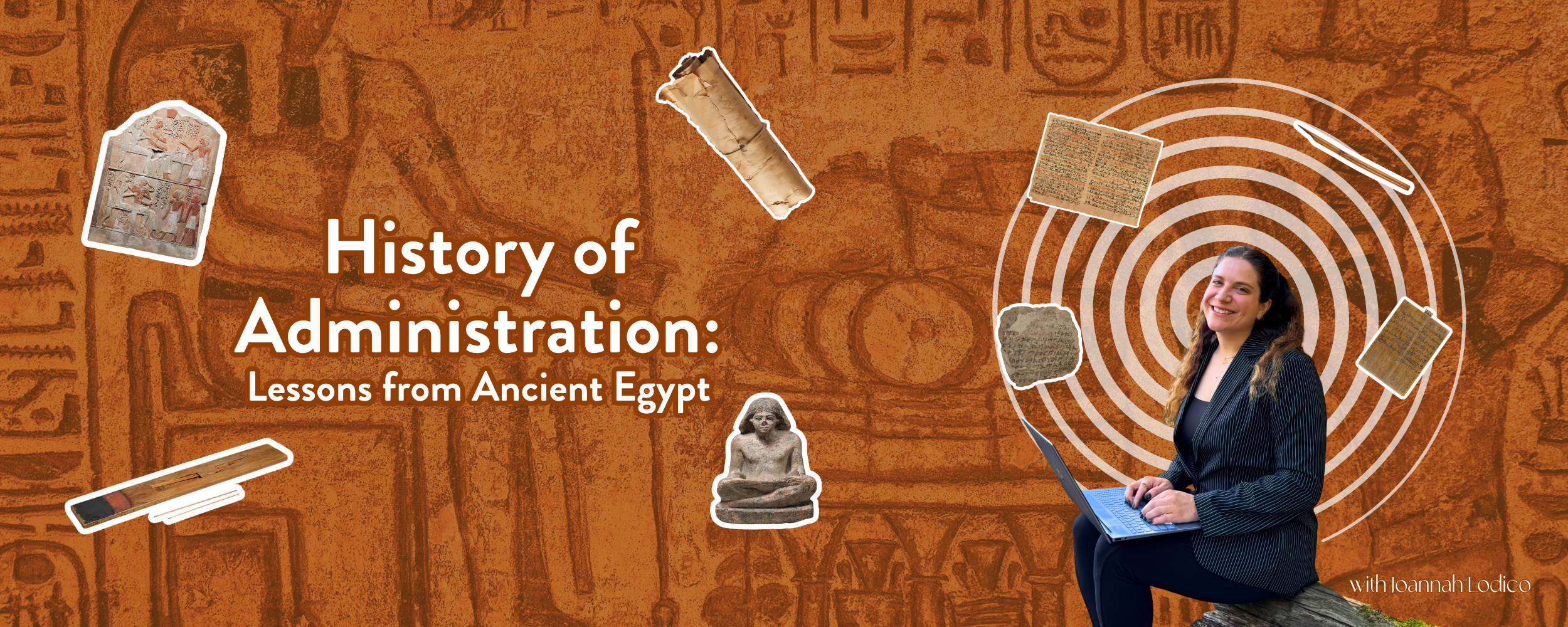
History of Administration: Lessons from Ancient Egypt
The Architects of Order: Administration in Ancient Egypt
The Egyptian empire lasted for thousands of years. This longevity was not accidental. It was built on a foundation of meticulous record-keeping, sophisticated archival systems, and a class of trained administrators whose work rivaled any modern operation in its precision and scope.
Ancient scribes were the original data analysts. They used structured systems not just to document the present, but to protect the future of a civilization.
Core Tools of the Trade
Scribes were the backbone of the empire. Their toolkit was purposeful, portable, and designed for both precision and durability.
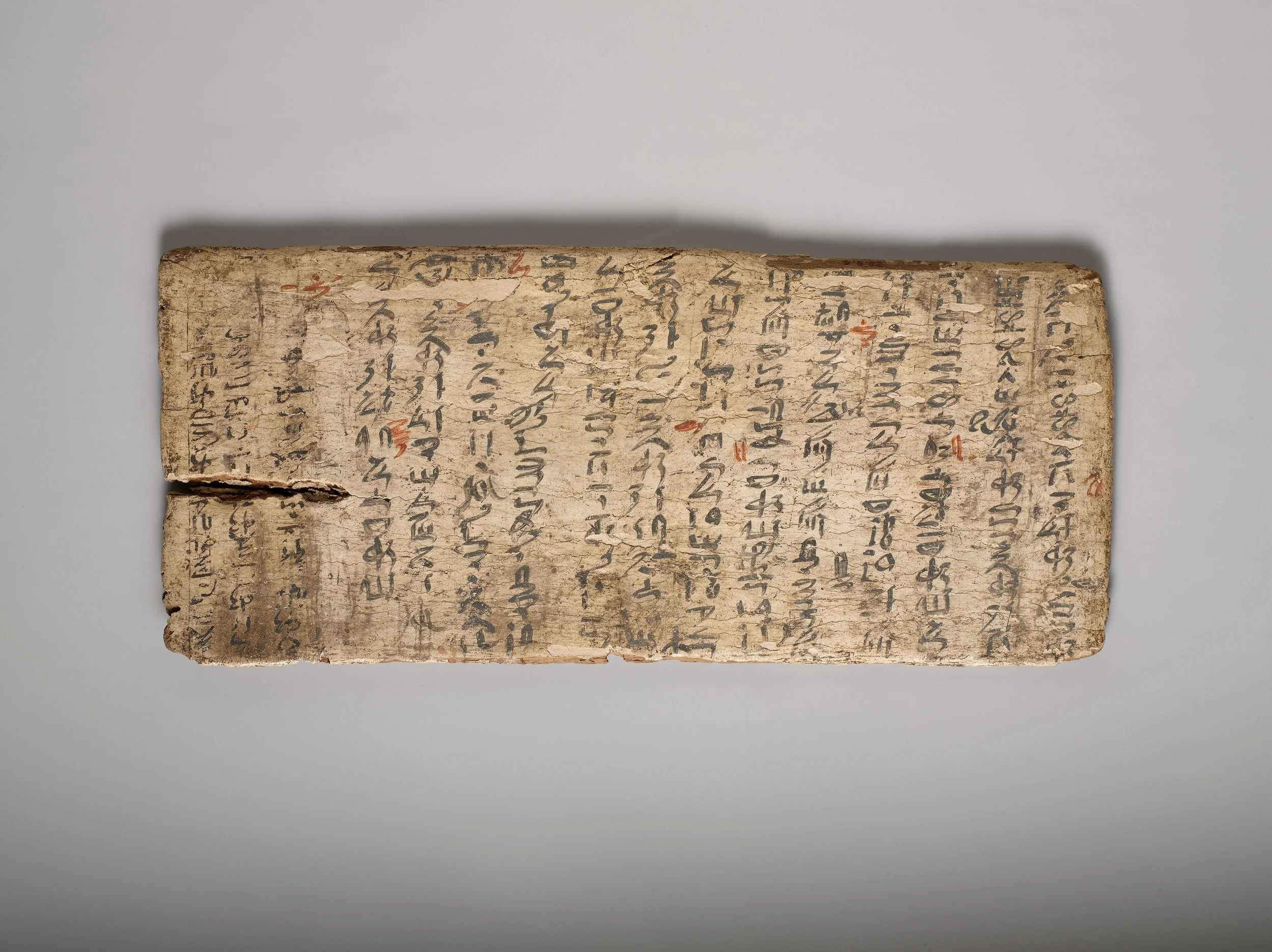
Source: : Egyptian Writing Board and Hieratic Ostracon with accounts from the MET Collection
Papyrus Scrolls: The primary writing surface, made from the papyrus plant and used for everything from tax records to legal contracts.
Reed Pens: Crafted from thin-stemmed reeds with frayed, trimmed tips to create brush-like writing instruments.
Ink Palettes: Flat wooden palettes with two wells — black ink from soot and gum for standard text, red ink from red ochre for headings, corrections, and key terms.
Ostraca: Broken pottery shards or limestone flakes used for drafts, notes, and practice when papyrus was too costly.
Wooden Writing Boards: Reusable surfaces coated in wax or plaster, reserved for temporary notes and calculations.
Techniques and Systems
Egyptian administrators used advanced methods to maintain clarity and accountability across a vast and complex empire.
Hieratic Script: A cursive form of hieroglyphics — faster and more practical than formal hieroglyphs for day-to-day administrative tasks.
Mathematical Notation: Unit fractions and symbols for large numbers allowed scribes to calculate taxes and debts with precision.
Nilometer Data: Flood-level measurements of the Nile were recorded seasonally and used to estimate agricultural output and set tax obligations.
Debt Registers: Detailed logs of outstanding debts, cross-referenced with census and land records for accuracy.
Audit Trails: Payments and defaults were tracked over time. Discrepancies could trigger formal investigations or penalties.
Systems of Curation and Preservation
The Egyptians did not simply record data. They curated it — developing methods to ensure information remained accessible, protected, and organized through every season of governance.
Organization
Scrolls were grouped by function: administrative, legal, and religious texts each had designated areas. External tags on scrolls indicated their subject, allowing retrieval without unrolling every sheet. Important documents were housed in labeled wooden chests or ceramic jars that shielded papyrus from humidity and damage.
Scroll Construction
Standard scrolls consisted of approximately 20 sheets glued together, with length adjusted by adding or removing sheets as needed. Most were written on a single side only, which simplified organization and maintained visual clarity. Scrolls were rolled from both ends toward the center, sometimes with wooden rollers or ties made from papyrus stalks.
Preservation
Scribes applied juniper-based resin to scrolls and storage containers to deter insects. Records were kept in dry, shaded environments to prevent mold and decay. Damaged scrolls were patched with fresh papyrus strips, faded texts were rewritten, and fragile sections were reinforced with linen or wax.
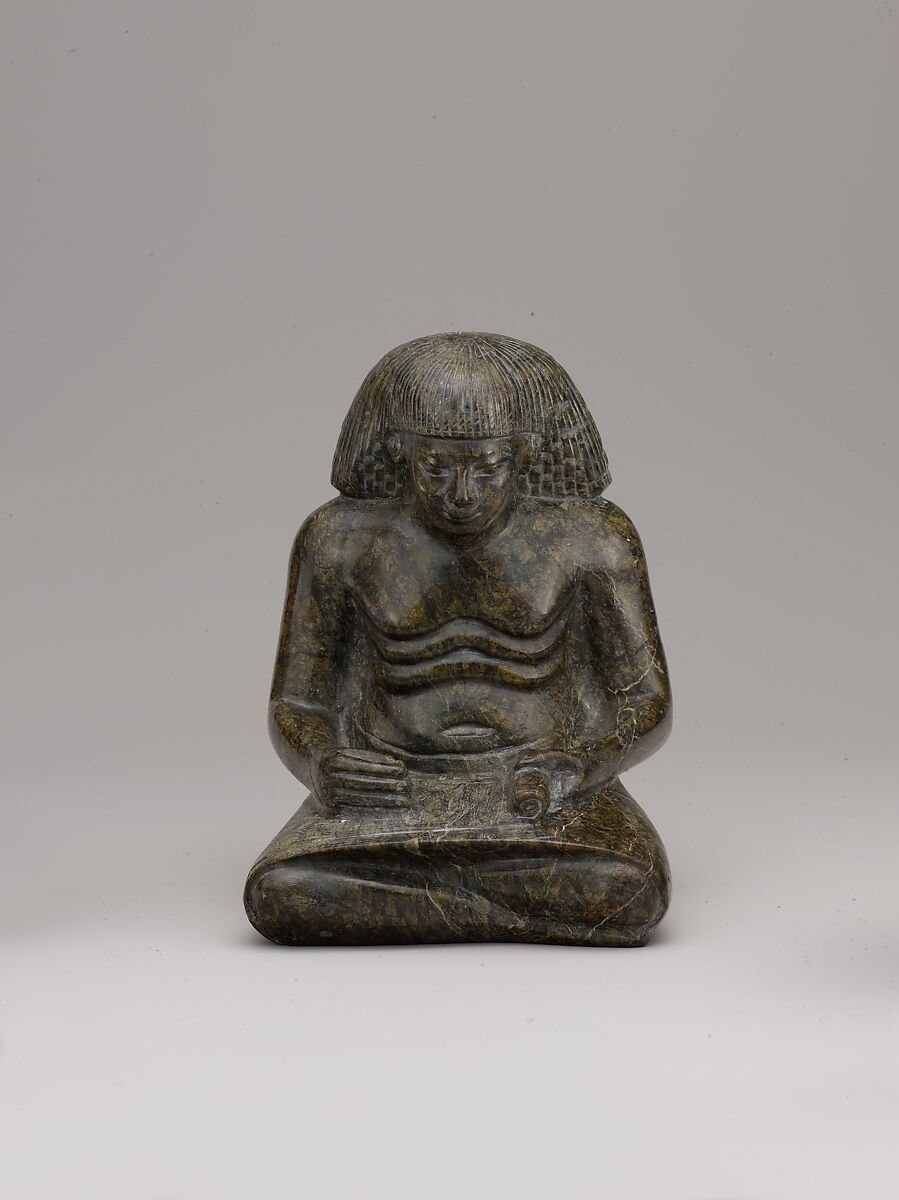
Statuette of a Scribe - from the MET Collection
Organizational Structure
The administrative hierarchy ensured that every part of the empire was managed with care.
Central Archives: Government offices and temples maintained organized libraries and chests, serving as the institutional memory of the state.
Scribe Schools: Training centers where students began as young as age five, learning reading, writing, mathematics, and legal procedure. They also served as working archives where students practiced by copying existing records.
Specialized Roles: Scribes held distinct titles and responsibilities: some focused on taxation, others on legal documentation, temple records, or royal decrees. Specialization ensured depth and accountability at every level.
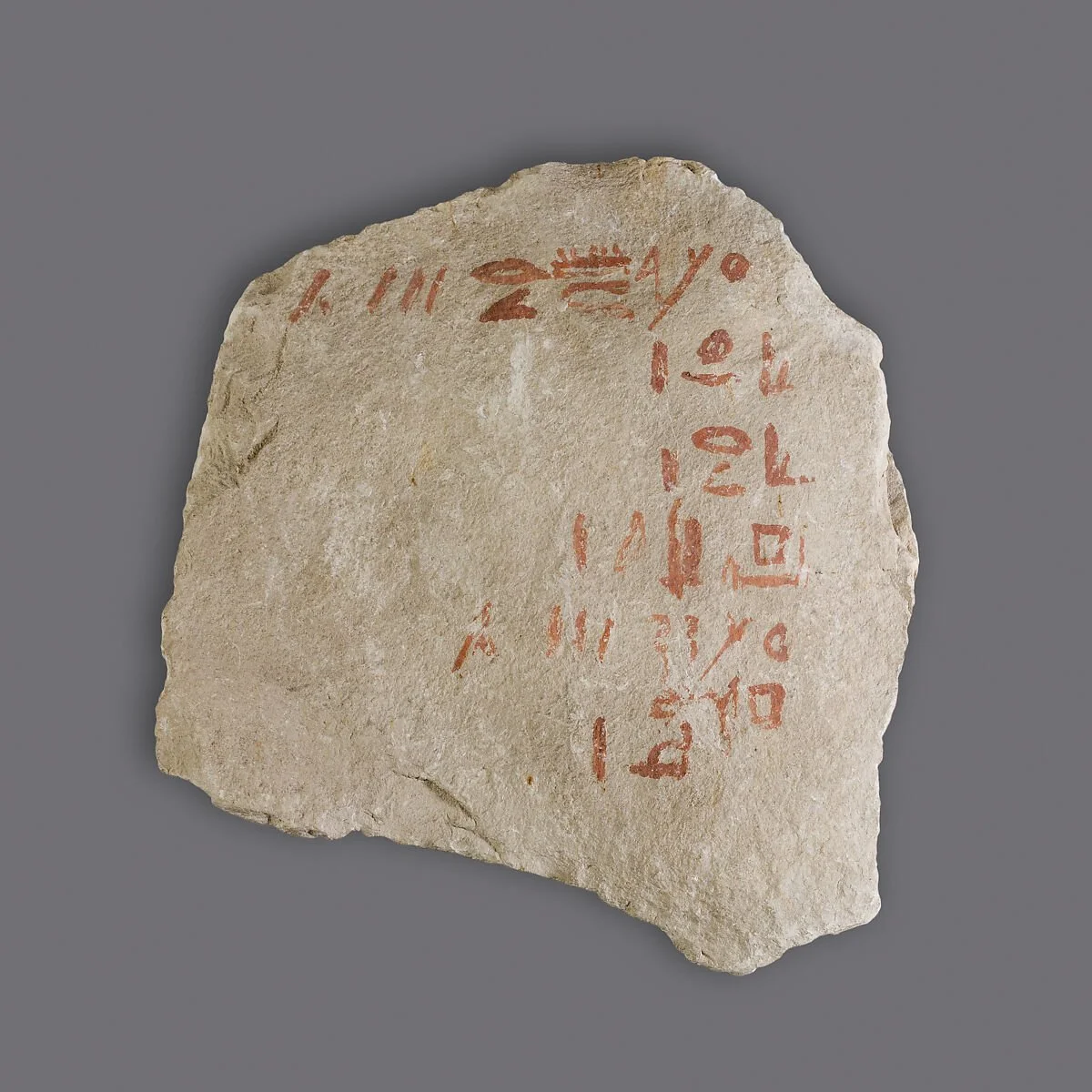
Hieratic Ostracon with accounts — from the MET Collection
Lessons for the Modern Studio
Ancient administration was a craft of stewardship — and the principles that made it work still hold. Whether on papyrus or a digital screen, the purpose of a well-designed system remains the same: to create a steady, lasting foundation so the work you care about can flourish without friction.
Key Takeaways
Visual hierarchy aids clarity: Red ink helped ancient scribes navigate complex data at a glance. Good design has always been functional.
Storage is stewardship: Proper containers protected the legacy of an empire. How you house your records shapes how long they serve you.
Systems allow for growth: Centralized archives gave Egypt the stability to scale across centuries. Scalable systems are not a luxury; they are the foundation.
Take the Next Step
Your work deserves a foundation that lasts.
Subscribe: Join the newsletter for seasonal insights on history and order.
Contact: Reach out to discuss building a system for your unique mission.
Follow: Find us on Instagram for more from the History of Administration series.
